
I'm writing this because I wouldn't have believed it myself. If someone had told me two months ago that I'd be wearing sandals again at 62 — without feeling ashamed of my feet — I'd have nodded politely and changed the subject. That's usually how it goes when somebody promises something that sounds too good to be true.
But I'd best start at the beginning. With the summer of 2025. With St Ives. And with the moment I knew, once and for all, that I could no longer ignore the problem.
Chapter 1The beach where I wouldn't take my shoes off
My daughter Sophie had invited us all down to St Ives. Her fifth wedding anniversary with James, the whole family in a cottage near Porthmeor Beach, three days together, three days by the sea. I'd been looking forward to it for weeks.
And then there we were on the beach. A glorious 26 degrees — a proper Cornish heatwave. Sophie barefoot in the sand, James barefoot, my grandchildren of course. Only me — in closed canvas shoes. With socks on underneath, even though it must have been pushing 28.
I couldn’t. I couldn’t tell her I hadn’t been barefoot in four years. Not at the swimming baths. Not at a hotel. Not even at home when visitors came round. For four years I’d hidden my toenails from everyone — from my daughters, from my best friend, from my own husband, who thankfully had stopped asking.
Nail fungus. That ugly, crumbling, yellowish thing that had turned my big toe into something that no longer belonged to me. Something I didn’t want to look at in the mirror, let alone show to anyone else.
That evening, back at the cottage, I told myself: enough. You’re going to see this through. Whatever it costs, however long it takes.
Chapter 2Four years of disappointment — chemist, GP and a long NHS wait
The trouble was, I’d already tried. Again and again.
My first day back from Cornwall: I went into our local chemist on the high street, the one I’ve used for twenty years. The lovely pharmacist, Mrs Bradshaw, smiled at me the way she always does.
I painted that lacquer on for three months. Every single evening. Exactly as it said on the box. Nothing. Not the slightest difference.
Attempt no. 2: a pricier tincture, “tea-tree oil combined with an antifungal”. £42 for the bottle. Two months. The nail looked exactly the same afterwards, only now it smelled of tea-tree oil.
Attempt no. 3: tablets from my GP. He prescribed Terbinafine, but at the same time read me a list of side effects that quite put me off my tea — liver function, loss of taste, allergic reactions. He also said I’d need blood tests to keep an eye on my liver. After three weeks I stopped taking them. My nail was still yellow. My liver, thankfully, was not.
Attempt no. 4: the dermatologist my GP referred me to. The NHS waiting list was eleven months — I had the appointment date written on the calendar like it was a holiday. When it finally came, she was kind and honest.
That was May 2024. I drove home and cried. Not because of the fungus — but because of those three words, “at your age”.
Chapter 3The Sunday phone call to my nan
My nan is 92. She lives on her own in a tiny terraced house in Penzance that she’s been in since 1962. I ring her every Sunday at three o’clock. It’s been that way for decades.
On that particular Sunday — it must have been late February 2026 — I told her about it. Not because I expected any advice. But because my nan is the one person I can tell these things to without feeling ashamed.
No, I didn’t.
I laughed and said how lovely. I didn’t ask any more about it.
But three days later, if I’m honest, I couldn’t let it go. A box. Up in my nan’s loft. Perhaps.
The following Wednesday I drove over to see her.
Chapter 4What was waiting in my nan’s loft
It took two hours. We opened boxes nobody had touched since the sixties. Photo albums, letters, a wedding dress wrapped in tissue paper. A whole world, packed away. My nan was thrilled. I was covered in dust.
Then, in a box right at the back under a loose board, a small wooden case. On the lid, in old copperplate handwriting: “Home Remedies — E. Carwell · 1942”. My great-grandmother. Eliza Carwell. The daughter of a chemist from Plymouth.
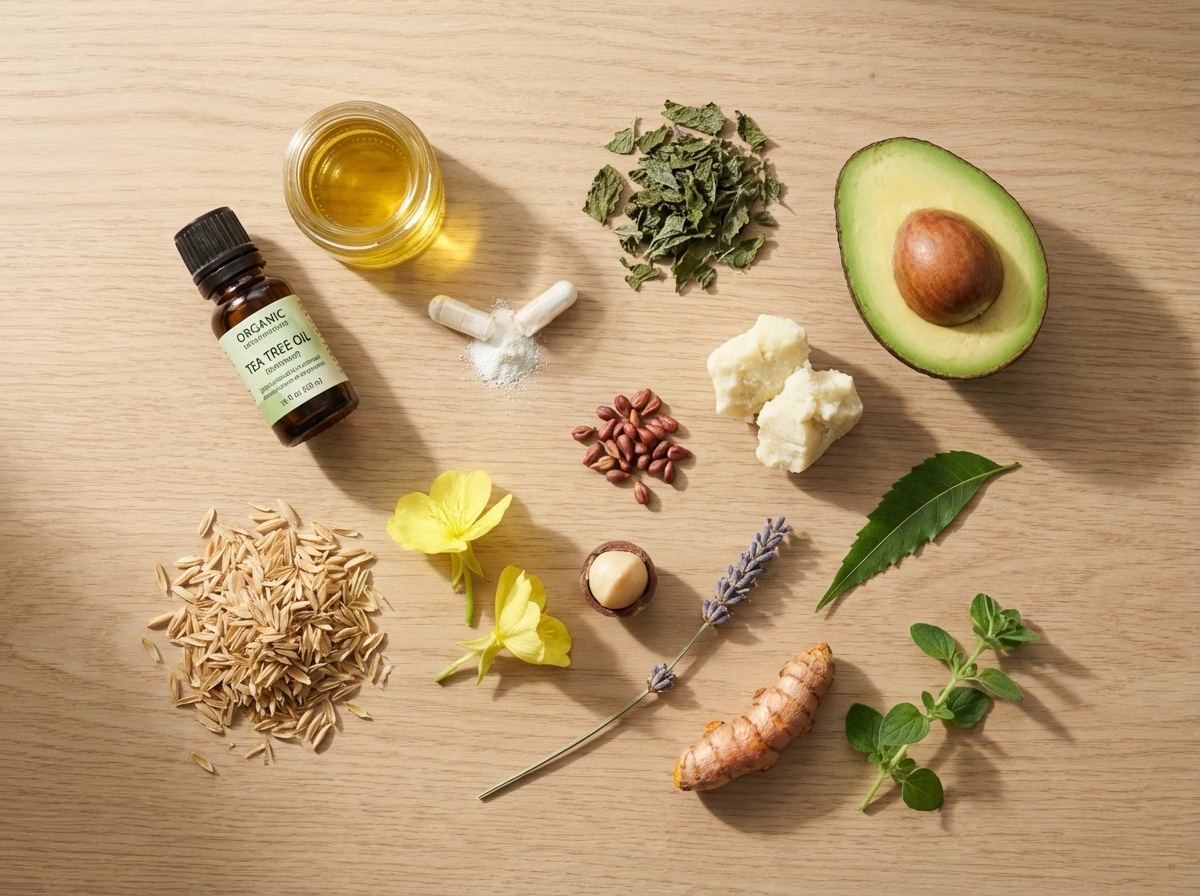
Inside: small brown bottles, dried leaves in little paper bags, and — this was the important find — a small, pale-green notebook. On the first page, in the same hand: “What truly helps poorly nails and fungus. As of 1947.”
I opened the notebook up there in the loft and read it.
Chapter 5The problem with actually making it
Two days later I sat at home trying to track down the ingredients on the list. I was rather excited. Until I realised it simply wasn’t going to work.
The individual plant extracts do exist. Some in health-food shops. Some at the chemist, some only online. But every one separately. And making the right blend, in the right proportions, at the right strength — that’s a chemist’s job. I’m a retired bookshop owner, not a pharmacist.
I told my daughter Sophie about it. Sophie’s in her late thirties and knows her way around the internet far better than I do. She spent two days researching.
I was sceptical. I’d tried something plant-based before (the tea-tree oil), and it had done nothing. Sophie laid my great-grandmother’s notebook next to the Orivelle ingredient list. The overlap was striking.
“You’ve nothing to lose,” she said, “except the price of one pack. If it doesn’t work, you send it back. They give you your money back.”
I placed the order. On the Thursday.
Chapter 6Day 1, Day 2, Day 3 — what actually happened
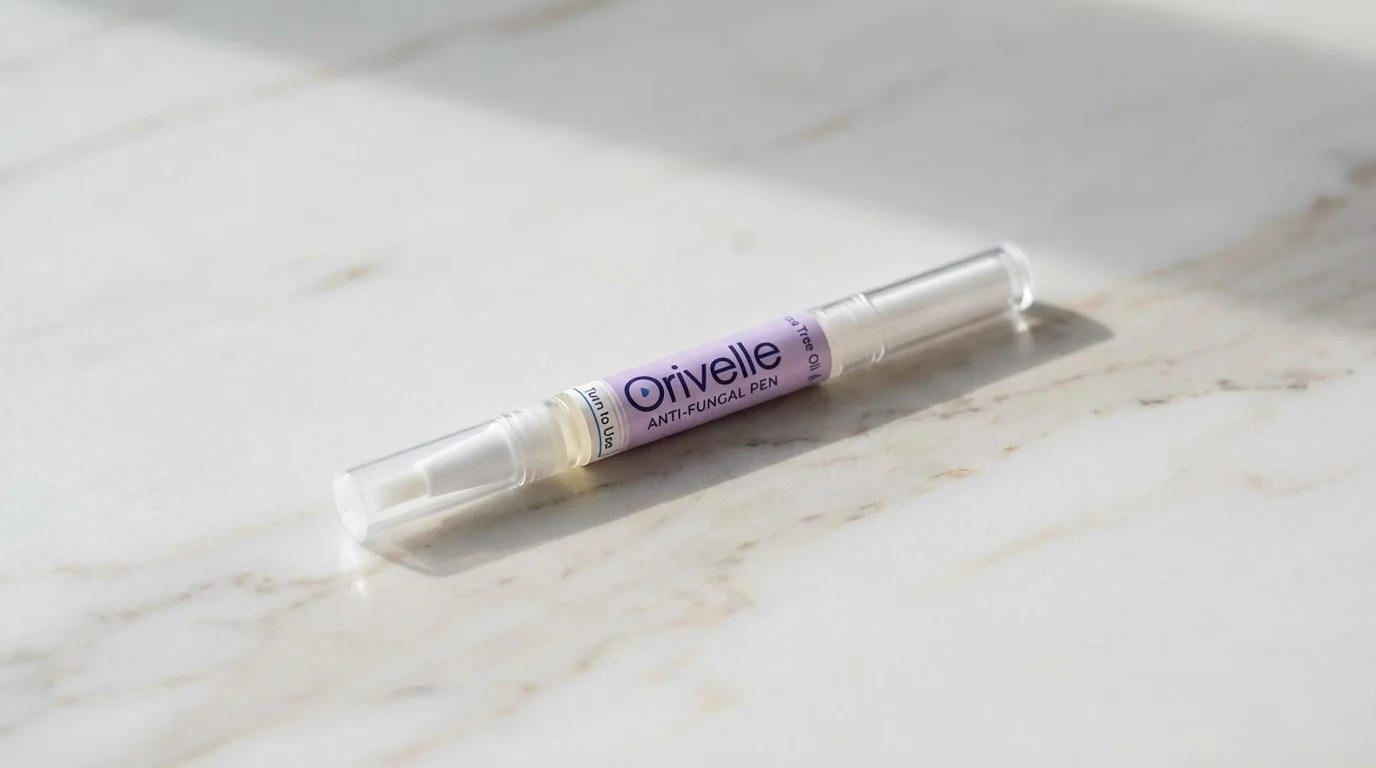
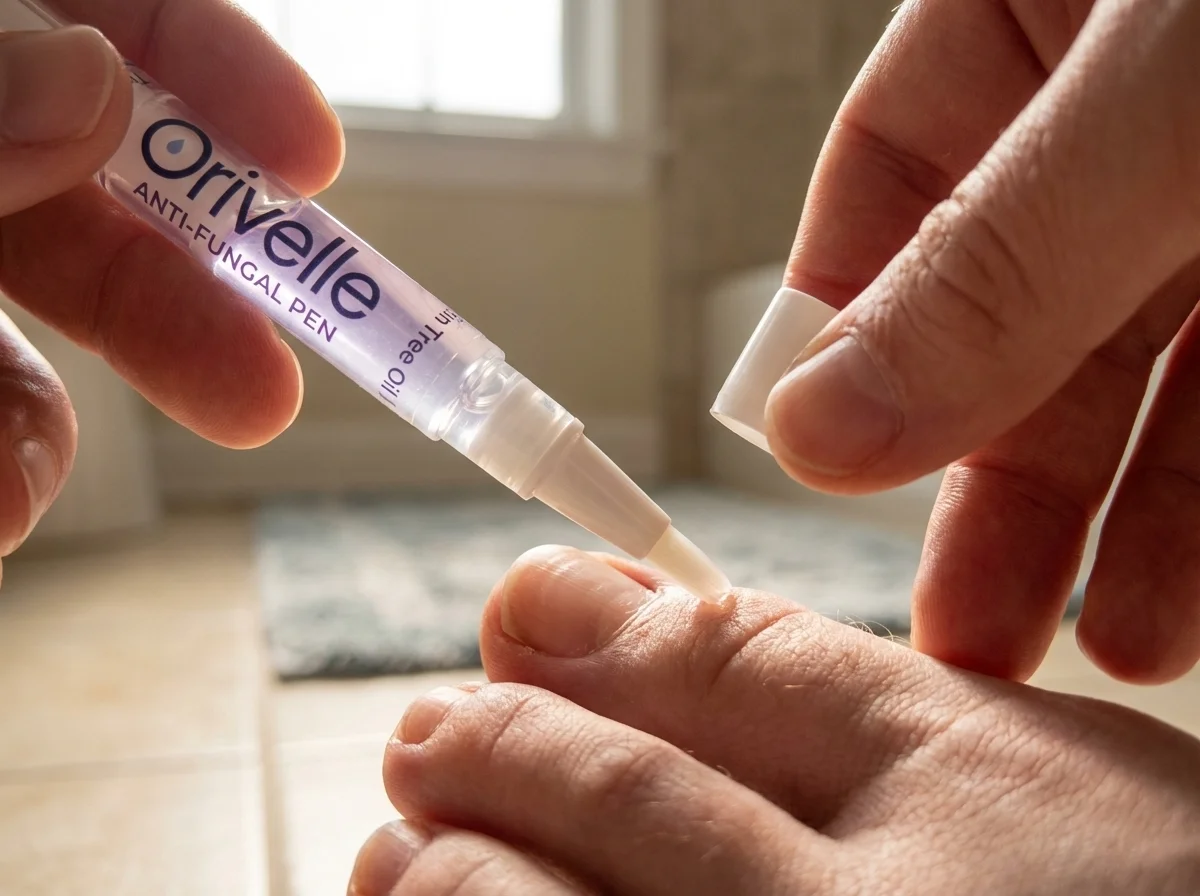
The parcel arrived on the Monday morning. A slim box, a precision pen, and clear instructions. I applied it that same evening — exactly as it said on the pack, once after my shower, leave for a minute. I had no expectations left. Four years had taught me not to.
What I saw in the mirror
I’m not telling you this because it sounds sentimental. I’m telling you because that’s exactly how it happened. Three and a half days. Not three months of chemist’s lacquer. Not three weeks of tablets with a liver warning. Three and a half days and a little pale-green notebook from my nan’s loft.
Chapter 7Three weeks later
I’m writing this now, on 14 May. Three weeks after day one. The nail isn’t one hundred per cent “new” — a nail grows out slowly, that takes its time. But the fungus is gone. The yellow layer is gone. My nail looks like the nail of someone who never had fungus at all.
Two weeks ago I went to the swimming baths. For the first time since 2021. I simply put my sandals in the locker and walked across the poolside. Nobody looked. Nobody needed to.
A week ago I took my nan a bunch of tulips. We looked through the notebook again. She told me her mother used this recipe constantly during the last months of the war — on servicemen who came back from the trenches with feet that had been wet for weeks. “There’s nothing mysterious about it, love,” she said. “Nature’s known how to do this for two thousand years. We just forgot.”
The plant-based nail-care pen
Fourteen active ingredients. One measured application, once a day. Delivered within the UK. With a 30-day returns policy — in case it doesn’t do for you what it did for me.


0 commentaires:
Enregistrer un commentaire